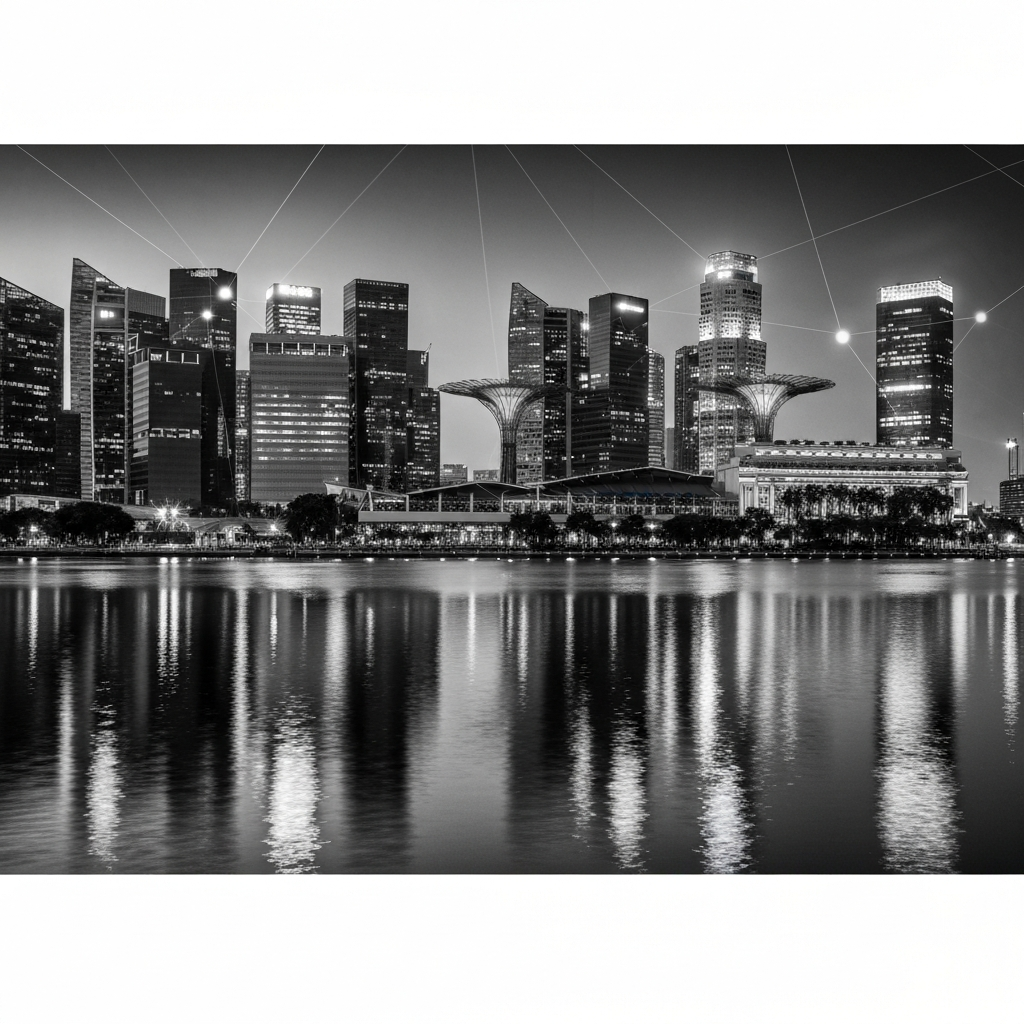
Singapore Property Investment Guide: Market Analysis and Investor Framework
Executive Summary
Singapore is Southeast Asia's premier property market — one of the world's most transparent, best-governed, and most expensive per square foot. The city-state's property market operates under strict government management, with cooling measures designed to prevent speculative excess and ensure housing affordability.
For investors, Singapore presents a paradox: exceptional governance and stability, combined with some of the world's highest entry barriers for foreign buyers. The 60% Additional Buyer's Stamp Duty (ABSD) for foreigners fundamentally reshapes the investment calculus — making the S-REIT market arguably the most efficient entry point for international capital.
Singapore Private Residential Stock
0
Total private residential units including condominiums and landed
S-REIT Market Cap
0
One of Asia's largest and deepest REIT markets (~40 listed S-REITs)
Key Insight
The S-REIT advantage: with ABSD making direct foreign purchase prohibitively expensive, the S-REIT market — valued at over S$100 billion with 40+ listed vehicles — offers international investors liquid, tax-efficient, and diversified access to Singapore and broader Asian property exposure without triggering stamp duty.
Market Structure
Singapore's housing market has a unique dual structure:
HDB vs Private Market
Singapore Housing Stock by Type
Breakdown of Singapore's total housing stock (~1.4M units)
Chart note: HDB (Housing & Development Board) flats house approximately 78% of Singaporeans. The private market — condominiums and landed — is the investable segment for most investors.
Tenure: The Leasehold Reality
Unlike many Western markets, Singapore property is overwhelmingly leasehold:
- 99-year leasehold: the standard tenure for most condominiums and HDB flats
- Freehold: approximately 20% of private stock; commands a 10–20% premium
- 999-year leasehold: a small number of historical titles, functionally equivalent to freehold
- State land: all land is ultimately owned by the Singapore government; leases are granted
Important
Leasehold decay is real. Properties below 60 years remaining lease face mortgage restrictions and declining values. For investment purposes, buying early in the lease cycle (80–99 years) is essential. Properties with less than 40 years rarely attract bank financing.
Key Districts
| District | Avg PSF (S$) | Gross Rental Yield | Investor Profile |
|---|---|---|---|
| CCR (Core Central — Orchard, Marina Bay) | 2,800–4,500 | 2.5–3.0% | Ultra-prime, trophy assets; foreign buyer dominated |
| RCR (Rest of Central — River Valley, Queenstown) | 2,000–2,800 | 3.0–3.5% | Mid-luxury; good rental demand from professionals |
| OCR (Outside Central — Jurong, Tampines, Woodlands) | 1,400–1,900 | 3.5–4.2% | Mass market; highest yields but lower capital growth |
| Sentosa Cove | 1,800–2,800 | 2.0–2.5% | Waterfront luxury; niche market, lower liquidity |
ABSD: The Foreign Investor Barrier
Singapore's Additional Buyer's Stamp Duty (ABSD) regime is among the world's most punitive for foreign buyers:
Total Stamp Duty on Purchase — By Buyer Profile
Combined BSD + ABSD as percentage of purchase price
Chart note: total duty includes BSD (up to 6% on properties above S$1.5M) plus ABSD. Foreign buyer ABSD is 60%, introduced April 2023. Data as of 2025.
ABSD Rates (Current)
| Buyer Type | 1st Property | 2nd Property | 3rd+ |
|---|---|---|---|
| Singapore Citizen | 0% | 20% | 30% |
| Permanent Resident | 5% | 30% | 35% |
| Foreigner (Individual) | 60% | 60% | 60% |
| Entity / Trust | 65% | 65% | 65% |
Key Insight
The ABSD changed the game. Before the 60% ABSD (April 2023), foreign buyers — particularly from mainland China — were significant players in the prime CCR market. Post-ABSD, foreign transaction volumes in the CCR have fallen by approximately 40%, redirecting international capital to S-REITs and the commercial sector, where ABSD does not apply.
Tax Framework
Beyond ABSD, Singapore's property tax structure is surprisingly competitive:
| Tax Category | Rate | Key Notes |
|---|---|---|
| Buyer Stamp Duty (BSD) | 1–6% (progressive) | Applies to all purchases; 6% on portion above S$1.5M |
| ABSD | 0–65% | See ABSD table above; dramatically impacts purchase cost |
| Seller Stamp Duty (SSD) | 4–12% | Applies if sold within 3 years; 12% in year 1, 8% year 2, 4% year 3 |
| Property Tax | 0–36% of Annual Value | Progressive; higher rates for non-owner-occupied (investment) properties |
| Rental Income Tax | 0–24% (progressive) | Personal income tax rates apply; effective rate for most investors 10–20% |
| Capital Gains Tax | 0% | No CGT in Singapore — capital gains on property are tax-free |
| Withholding Tax (Non-Residents) | 24% on gross rental | Non-resident landlords taxed at 24% of gross rental income (no deductions) |
Note
Zero capital gains tax is Singapore's hidden advantage. While ABSD creates enormous upfront friction, the absence of CGT means all property appreciation is tax-free. For long-term holders (10+ years), the effective annualised impact of ABSD diminishes significantly against untaxed capital gains.
The S-REIT Market
Singapore's REIT market is one of the most developed in Asia and the world:
Market Overview
S-REIT Market Composition by Sector
S-REIT sector breakdown by market capitalisation (S$100B+ total)
Chart note: S-REITs are required to distribute at least 90% of taxable income to qualify for tax transparency treatment. Distribution yields are therefore a key metric.
Top S-REITs by Market Cap
| S-REIT | Sector | Market Cap (S$B) | Distribution Yield | Asset Geography |
|---|---|---|---|---|
| CapitaLand Integrated Commercial Trust | Retail/Office | 14.5 | 5.2% | Singapore, Germany, Australia |
| Mapletree Logistics Trust | Logistics | 7.0 | 5.8% | APAC 9 countries |
| Mapletree Industrial Trust | Industrial/Data Centre | 6.5 | 5.5% | Singapore, US, Japan |
| Ascendas REIT | Industrial/Business Park | 11.0 | 5.5% | Singapore, Australia, US, UK |
| Frasers Centrepoint Trust | Suburban Retail | 4.0 | 5.5% | Singapore |
| Keppel DC REIT | Data Centres | 3.5 | 4.5% | Singapore, APAC, Europe |
| Parkway Life REIT | Healthcare | 2.8 | 3.5% | Singapore, Japan |
S-REIT Advantages
- Tax transparency: distributions are not taxed at the REIT level; investors pay tax only at their personal rate
- International diversification: many S-REITs hold assets across 5–10 countries, providing APAC-wide exposure
- No ABSD: REIT units are securities, not property — no stamp duty on purchase
- Governance: regulated by MAS (Monetary Authority of Singapore); high transparency standards
- Yield premium: S-REITs generally offer 4.5–6.5% distribution yields vs 2.5–4.0% on direct property
Investment Strategies
For Singapore Citizens / PRs
| Strategy | Vehicle | Target Return | ABSD Consideration |
|---|---|---|---|
| Primary Residence + Investment Condo | Direct | 3–5% yield + capital growth | 20% ABSD on 2nd property for SC; 30% for PR |
| S-REIT Income Portfolio | S-REITs via CDP | 5–6% yield | None — REIT units are securities |
| New Launch Condo (OCR) | Direct | 3.5–4.5% yield | Higher yields in mass market; lower capital growth |
| Commercial Property | Direct / Strata | 4–5% yield | No ABSD on commercial property |
For Foreign Investors
| Strategy | Vehicle | Target Return | Viability Assessment |
|---|---|---|---|
| S-REIT Portfolio (Recommended) | Listed S-REITs | 5–6% yield + growth | High — no ABSD, liquid, diversified |
| Commercial / Industrial Direct | Direct / Strata office or industrial | 4–5% yield | Medium — no ABSD, but higher entry, lower liquidity |
| Residential Direct | Condo purchase | 2.5–3.5% yield | Low — 60% ABSD makes this rarely viable |
| Singapore PE Real Estate Fund | LP interest in fund | 10–15% target | Medium — accredited investors, $250K+ minimum |
Key Insight
The rational choice for foreign investors is S-REITs. The 60% ABSD means a foreign buyer paying S$2M for a condo pays S$1.2M in ABSD alone. To recover this through rental yield (3%) would take approximately 20 years — before accounting for opportunity cost. S-REITs offer higher yields with zero entry friction.
Market Outlook 2026–2027
Singapore Property Price Index Trend
URA Private Residential Property Price Index (2018–2026E)
Chart note: URA Private Residential Property Price Index rebased. Growth has moderated from 7.9% in 2022 to an estimated 1.5–2.0% in 2026 as cooling measures take effect.
Key outlook factors:
- ABSD unlikely to be relaxed in the near term — government continues to prioritise affordability
- New supply pipeline of approximately 50,000+ units in various stages may weigh on prices
- S-REIT yields remain attractive at 5–6% in a stabilising rate environment
- Data centre demand growing rapidly, benefiting industrial S-REITs with DC exposure
- Sentosa Cove and luxury segment may see selective interest from UHNWIs pursuing residency pathways
Conclusion
Singapore represents the gold standard in market governance and transparency, but its cooling measures — particularly the 60% ABSD for foreigners — mean the optimal investment approach depends entirely on investor profile:
- For foreign investors, the S-REIT market is the clear pathway — offering 5–6% yields, APAC diversification, and zero stamp duty, in one of the world's best-regulated securities markets
- For Singapore Citizens, the combination of a primary residence (0% ABSD) plus S-REITs provides optimal diversified exposure; a second investment property requires careful ABSD payback analysis
- Zero capital gains tax remains Singapore's long-term advantage — for holders over 10+ years, the ABSD cost is amortised against untaxed appreciation
- Leasehold dynamics require attention — buying properties with sufficient remaining lease (80+ years) is critical for both financing and resale value
- Commercial property (office, industrial, retail strata) offers an ABSD-free entry point for direct investors, though with different risk-return characteristics
Singapore is not a mass-market investment destination for foreigners. It is a governance-premium market where the S-REIT structure provides the most efficient risk-adjusted access to Asia's most transparent property sector.
FAQ
Can foreigners buy property in Singapore? Yes, foreigners can buy private condominiums. However, a 60% ABSD applies, making it extremely expensive. Foreigners cannot buy HDB flats or landed property without special approval.
What is the minimum investment for Singapore property? A small condo in the OCR starts at approximately S$800,000–S$1,200,000. With 60% ABSD, a foreign buyer would need S$1.3M–S$2M total for the same unit. S-REIT units can be purchased from as little as a few hundred dollars.
Are S-REITs a good alternative to direct property? For foreign investors especially, S-REITs offer higher yields (5–6% vs 2.5–3.5% for direct residential), no ABSD, daily liquidity, and professional management. They are widely regarded as the optimal Singapore property exposure for non-residents.
Will ABSD rates come down? Unlikely in the near term. The government views cooling measures as essential for housing affordability. Rates have generally only increased over time.
What happens when a leasehold property reaches expiry? When the lease expires, the property reverts to the state. The government may choose to renew the lease (rare), acquire and redevelop the land, or allow collective sale (en-bloc). Properties approaching lease expiry decline significantly in value.
Is Singapore property a good store of value? Historically excellent — prices have appreciated consistently over multi-decade periods. However, the ABSD regime means foreign buyers may take 15–20 years to break even after stamp duty costs, making timing and holding period critical.