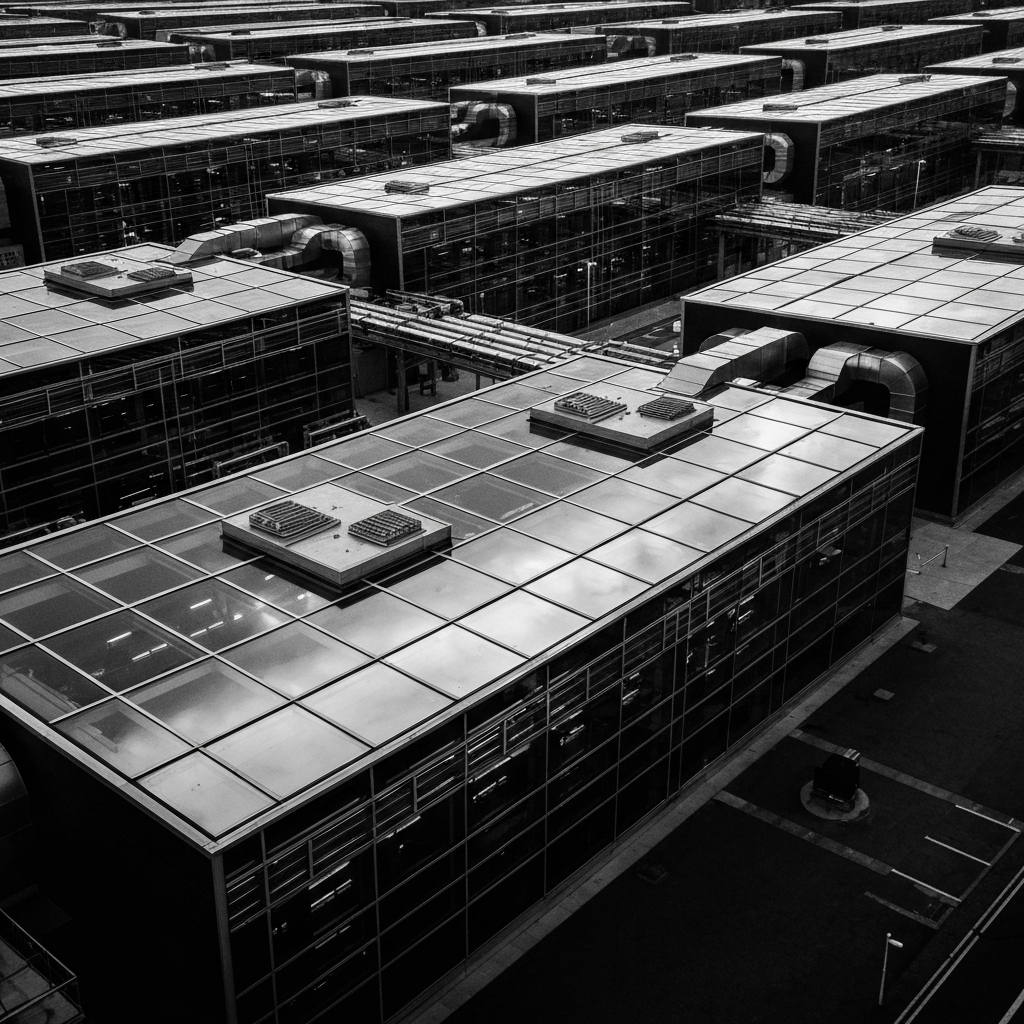
Data Centre Real Estate Investment: The AI Infrastructure Boom
Executive Summary
Data centres have transitioned from niche infrastructure to mainstream real estate. Global data centre investment reached $89 billion in 2025, driven by explosive demand from AI training, cloud computing, and digital transformation. Yields of 5.5–7.5% and structural demand growth make the sector attractive, but power constraints, regulatory complexity, and technological obsolescence create distinct risks.
This analysis examines the data centre investment landscape—market size, geographic distribution, tenant dynamics, and the factors determining long-term returns.
Global Data Centre Investment (2025)
0
Total investment in data centre development and acquisitions
AI Workload Demand Growth
0
Year-over-year growth in AI training and inference compute demand
Key Insight
The power constraint reality: Data centre development is increasingly limited by electricity grid capacity, not capital or land. Markets with surplus power (Nordics, parts of US Southeast) command significant premiums over constrained locations.
Market Size and Structure
The global data centre market has grown from $180 billion (2019) to over $380 billion (2025), with real estate representing approximately 40% of total value—land, construction, power infrastructure, and facility hard costs.
Global Data Centre Market Growth
Market size in $B (infrastructure + real estate + equipment)
Chart note: market size includes colocation, hyperscale, enterprise, and edge data centres. Real estate value estimated at 35–45% of total depending on region and facility type.
Market Segmentation
| Segment | Market Share | Typical Size (MW) | Yield Range | Primary Tenants |
|---|---|---|---|---|
| Hyperscale | 42% | 50-200 | 5.0-6.5% | AWS, Azure, Google, Meta |
| Colocation | 31% | 5-50 | 6.5-8.5% | Enterprises, SaaS companies |
| Enterprise | 18% | 1-10 | 7.0-9.0% | Large corporations |
| Edge | 9% | 0.1-2 | 8.0-12.0% | 5G, IoT, CDNs |
Structural Demand Drivers
Data centre demand is driven by several powerful, multi-year trends:
AI Training and Inference
Large language models (LLMs) and generative AI require massive compute infrastructure:
- Training clusters: Single models may require 10,000+ GPUs running for months
- Inference load: Deployed models require ongoing compute for user queries
- Model proliferation: Enterprises deploying custom fine-tuned models multiply demand
AI workloads now represent 35% of hyperscale data centre demand, up from less than 5% in 2022.
Cloud Migration
Enterprise workloads continue migrating from on-premise to cloud:
- Global cloud spend reached $680 billion in 2025 (+23% YoY)
- Cloud penetration still only 25% of total IT spend—significant runway remains
- Hybrid and multi-cloud strategies increase data centre demand complexity
Digital Transformation
Broader digital trends sustain demand:
- 5G rollout requires edge computing infrastructure
- IoT devices generate data requiring local processing
- Streaming video and gaming drive bandwidth and compute needs
- Remote work permanently increased cloud application usage
Data Centre Demand by Workload Type
Percentage of total demand by application (2025)
Chart note: excludes cryptocurrency mining, which has declined as a share of data centre demand from 8% (2021) to under 3% (2025).
Geographic Market Analysis
Data centre development concentrates in markets with favourable conditions: abundant power, political stability, low disaster risk, and proximity to population centres.
Major Markets by Capacity
| Market | Existing Capacity (GW) | Under Construction (GW) | Power Cost ($/MWh) | Key Constraint |
|---|---|---|---|---|
| Northern Virginia | 4.2 | 1.8 | 78 | Transmission capacity |
| London | 1.8 | 0.9 | 142 | Land availability |
| Frankfurt | 1.6 | 0.7 | 145 | Grid saturation |
| Singapore | 0.9 | 0.4 | 152 | Moratorium lifted |
| Tokyo | 1.4 | 0.5 | 168 | Land costs |
| Sydney | 0.7 | 0.4 | 98 | Grid constraints |
| Dublin | 0.8 | 0.3 | 112 | Moratorium in place |
| Phoenix | 1.1 | 0.8 | 62 | Water availability |
Emerging Markets
Several markets are seeing accelerated development due to power availability and incentives:
- Nordics: Cheap renewable power (hydro/wind) attracts hyperscale facilities. Iceland, Norway, and Sweden offer sub-$50/MWh power.
- US Southeast: Atlanta, Charlotte, and Northern Florida have surplus nuclear and gas generation capacity.
- India: Bangalore and Hyderabad emerging as major hubs; Mumbai and Chennai capacity-constrained.
- Saudi Arabia: NEOM and Riyadh receiving massive investment under Vision 2030.
Important
The power bottleneck: Markets like Northern Virginia, Frankfurt, and Singapore have effectively hit grid capacity limits. New development requires multi-year transmission upgrades or is shifting to secondary locations.
Investment Economics
Capital Costs
Data centres are capital-intensive assets with high upfront costs and long depreciation schedules:
| Component | Hyperscale ($/kW) | Colocation ($/kW) | Edge ($/kW) |
|---|---|---|---|
| Land & Shell | 450 | 520 | 680 |
| Power Infrastructure | 1,800 | 2,200 | 2,800 |
| Cooling Systems | 650 | 780 | 920 |
| IT Infrastructure | 8,500 | 6,200 | 4,500 |
| Total Development Cost | 11,400 | 9,700 | 8,900 |
Chart note: costs vary significantly by location, design standards, and power density. IT infrastructure costs borne by tenant in many colocation arrangements.
Yield Dynamics
Data centre yields vary by segment, location, and lease structure:
Data Centre Yield by Segment and Market
Prime yield ranges by facility type and geography (2025)
Chart note: yields are gross initial yields on stabilised assets. Net yields after operating expenses typically 100–150 bps lower.
Lease Structures
Data centre leases differ fundamentally from traditional real estate:
- Long-term: 10–15 year initial terms are standard for hyperscale; 5–10 years for colocation
- Triple-net: Tenants typically pay for power, cooling, and sometimes even property tax
- Escalators: 2–3% annual rent increases common, sometimes tied to CPI
- Renewal options: High renewal rates (>85%) due to high switching costs
- Power pass-through: Many leases structure rent as "shell + power" with tenant paying actual consumption
Risk Factors
Technological Obsolescence
Data centres face rapid technology cycles:
- Power density: Modern AI training requires 50–100 kW per rack vs 5–10 kW traditional
- Cooling evolution: Liquid cooling replacing air cooling for high-density workloads
- Chip evolution: GPU/TPU architectures change every 2–3 years
Buildings designed for 2020 workloads may be unsuitable for 2030 AI requirements.
Power and Sustainability Constraints
- Grid capacity: As noted, many prime markets are power-constrained
- Carbon regulations: EU and other jurisdictions imposing carbon intensity requirements
- Water usage: Cooling requirements create water stress in arid regions
- Community opposition: Data centre development facing "not in my backyard" resistance
Tenant Concentration
Hyperscale facilities often have 1–2 tenants representing 80%+ of income:
- Credit risk: Tenant defaults would devastate returns
- Renewal risk: Tech companies build their own facilities once scale warrants it
- Negotiation leverage: Large tenants have significant bargaining power
Regulatory and Tax Risk
- Data sovereignty: Increasing requirements for local data storage (EU, China, India)
- Tax incentives: Many developments rely on abatements that may not be renewed
- Zoning: Land use restrictions tightening in many jurisdictions
Market Sentiment and Capital Flows
Sentiment towards data centre investment has shifted dramatically:
Data Centre Investment Sentiment Index
Institutional investor sentiment (100 = extremely bullish)
Chart note: sentiment index based on surveys of institutional investors, capital deployment trends, and pricing metrics. 2025 shows slight moderation due to power constraint concerns.
Current sentiment drivers:
- Bullish: Structural AI demand, yield premiums to traditional real estate, long lease terms
- Cautious: Power constraints limiting growth, rising construction costs, potential oversupply in some markets
- Concern: Interest rate sensitivity, tenant concentration risk, technological uncertainty
Capital sources:
- Private equity: Dominates development (Blackstone, KKR, DigitalBridge)
- REITs: Publicly traded data centre REITs (Equinix, Digital Realty, American Tower)
- Infrastructure funds: Long-term holds matching liability profiles
- Sovereign wealth: Increasing allocation to digital infrastructure
Portfolio Allocation Considerations
Data centres merit consideration in diversified real estate portfolios:
Strategic Rationale
- Yield enhancement: 100–200 bps yield premium to equivalent-quality traditional real estate
- Diversification: Low correlation with economic cycles; demand driven by technology adoption
- Inflation hedge: Long leases with escalators and power pass-throughs
- Growth option: Structural demand tailwinds from AI and digital transformation
Implementation Vehicles
| Vehicle | Min. Investment | Liquidity | Target Return | Risk Level |
|---|---|---|---|---|
| Data Centre REITs | $1,000 | High (daily) | 8-12% | Moderate |
| Infrastructure Funds | $10M+ | Low (7-10 years) | 10-15% | Moderate-Low |
| Development JVs | $25M+ | Very Low | 18-25% | High |
| Public Equities | $1,000 | High | 12-18% | High |
Conclusion
Data centres represent one of real estate's most compelling investment opportunities—but one that requires specialized expertise and careful risk management.
The bull case is supported by structural demand from AI, cloud computing, and digital transformation. Yields are attractive, leases are long-term, and demand shows no signs of abating.
The bear case focuses on power constraints, tenant concentration, technological obsolescence, and the potential for supply overbuild in certain markets.
For investors, the prudent approach is:
- Start with diversified exposure: REITs or funds rather than single-asset development
- Focus on power-advantaged markets: Locations with surplus electricity and renewable energy
- Prioritise creditworthy tenants: Hyperscale cloud providers over speculative users
- Underwrite for technology evolution: Assume buildings will require upgrades within 10–15 years
- Monitor regulatory developments: Data sovereignty and carbon requirements are evolving rapidly
Data centres are not traditional real estate—they are technology infrastructure with real estate characteristics. Investors who understand this distinction will capture the opportunity; those who treat them like office buildings will face disappointment.
FAQ
Are data centre yields higher than traditional real estate? Yes, typically 100–200 basis points higher than equivalent-quality office or industrial assets. This premium reflects the specialized nature of the asset class and tenant concentration risks.
What is the biggest risk in data centre investment? Power constraints. Many prime markets cannot accommodate additional demand due to grid limitations. Buildings in power-constrained locations may face development delays or reduced valuations.
How long do data centre leases typically run? Hyperscale facilities: 10–15 years initial term. Colocation: 3–10 years. Renewal rates are high (>85%) due to switching costs and tenant investment in fit-out.
Will AI demand continue driving growth? Structural tailwinds suggest yes—AI training and inference workloads are growing 40%+ annually. However, efficiency improvements (better chips, model optimisation) may moderate absolute power demand growth.